News
Antoine Pin Joins De Bethune: What the Leadership Change Means for an Independent Manufacture
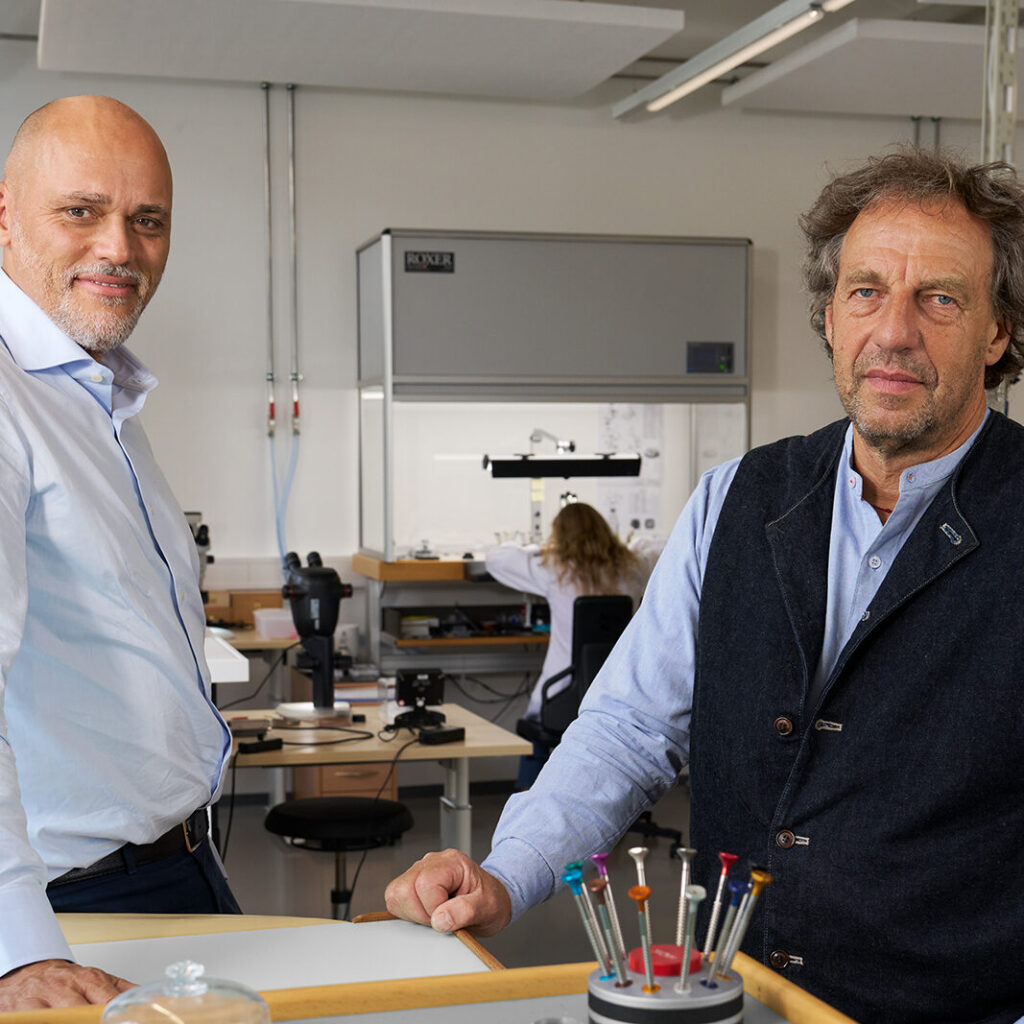
Antoine Pin formally joined De Bethune as chief executive on 1 July 2026, stepping into a role that carries real weight at one of independent watchmaking’s most technically ambitious houses. The timing is deliberate: De Bethune is marking its 25th anniversary, and its American owner, The 1916 Company, has clearly decided this milestone is the right moment to install leadership capable of expanding the brand’s commercial footprint without dismantling what makes it worth expanding in the first place.
Pin’s predecessor, Pierre Jacques, held the position twice — from 2010 to 2015, and again from 2017 to 2025 following a change in ownership. That kind of continuity at the executive level is unusual even by independent watchmaking standards, and it shaped De Bethune’s trajectory through two distinct ownership eras. Pin arrives from a different context entirely. His most recent post was chief executive of TAG Heuer, a role he held for roughly 18 months before departing at the start of 2026. Before that, he spent two decades at LVMH, moving through management positions at Berluti, Bulgari, and Zenith. The commercial and operational scale he is accustomed to is orders of magnitude larger than De Bethune’s current output — the brand sells in a year what a single TAG Heuer boutique moves in a few months.
That gap in scale is not a liability. It is, in fact, the point. The appointment reads as a deliberate effort to bring structured commercial discipline to a manufacture that has historically prioritized technical invention over distribution reach. The reference point being cited in industry circles is F.P. Journe, an independent that managed to grow meaningfully in both volume and prestige without compromising its manufacture credentials. Whether De Bethune can follow a similar trajectory depends heavily on what happens at the workbench level, not just in the boardroom.
Which is precisely why the continued presence of Denis Flageollet matters so much to how this transition should be read from a manufacturing perspective. Flageollet is De Bethune’s cofounder and has been its technical engine since the beginning. His background stretches to Sainte-Croix in the 1990s, and his recent work includes the Sympathique clock developed in collaboration with Louis Vuitton — a project that required solving genuine horological engineering problems, not simply producing a prestige object. He is not a figurehead. His retention in a hands-on technical role is the structural guarantee that whatever commercial ambitions Pin pursues, the R&D and movement construction priorities that define De Bethune’s identity remain under the direction of someone who built them.
For component suppliers and manufacturing partners, this kind of leadership structure — a commercially oriented CEO paired with a technically sovereign founder — creates a specific set of dynamics. R&D timelines and material development programs tend to be insulated from short-term commercial pressure when the technical lead has genuine authority. The risk, which any supplier working with a growing independent will recognize, is that scaling production volume puts stress on finishing and assembly processes that were designed around artisanal throughput. Tolerances that are achievable at low volume become quality-control problems when output increases, even modestly. How De Bethune manages that tension will be the real test of whether this leadership pairing functions as intended.

Pin’s mandate, as it can be reasonably inferred from the circumstances of his appointment, is to extend De Bethune’s reach into markets and client segments that Pierre Jacques did not fully penetrate — while preserving the manufacture’s credibility with the audience that already understands what Flageollet’s work represents. That is a narrower path than it sounds. Independent watchmaking’s most technically serious buyers are also its most skeptical.
From a supply-chain standpoint, growth at an independent of De Bethune’s scale typically means longer component lead times, tighter specification management across a broader supplier base, and more rigorous incoming inspection protocols — not because quality was previously ignored, but because the systems that work informally at low volume need to be formalized as throughput increases. Whether Pin brings the operational infrastructure to manage that transition, and whether Flageollet’s technical standards can be codified without losing their character, are the practical questions that will define the next phase of the brand’s manufacturing story.
The 25th anniversary provides a useful narrative frame, but the more consequential marker will be what De Bethune’s movement construction and component finishing look like two or three years from now, when the effects of this leadership structure have had time to propagate through the manufacture’s actual production processes.