Design
Hermès Cape Cod Titanium: Machining and Surface Finishing a Rectangular Case in Grade Titanium

Hermès introduced the Cape Cod Titanium in 2026 as a 41 mm rectangular case in titanium, with a vertically brushed finish across the case flanks and a monochromatic dial broken only by an orange seconds hand. The movement is the calibre H1912, an automatic running at 28,800 beats per hour with a 45-hour power reserve and a free-sprung balance. Those facts alone make it worth examining from a manufacturing standpoint, because the combination of a non-round case geometry, titanium as the primary material, and an all-brushed surface treatment creates a specific set of production challenges that a round stainless steel case simply does not.
Why Titanium Complicates a Rectangular Case
Titanium’s low density is the obvious selling point—the Cape Cod wears noticeably light on the wrist despite its 41 mm width. But density and hardness are not the same property, and this is where manufacturers encounter the real difficulty. Titanium’s hardness relative to steel is lower, which means it scratches more readily under normal wear. On a round case, that is manageable: the geometry distributes contact evenly, and a brushed finish on a curved surface is straightforward to maintain and restore. A rectangular case is different. The flat flanks, the squared edges, and the sharp transitions between surfaces all represent areas where a brushing operation must be executed with consistent pressure and direction, or the finish reads as uneven under raking light.
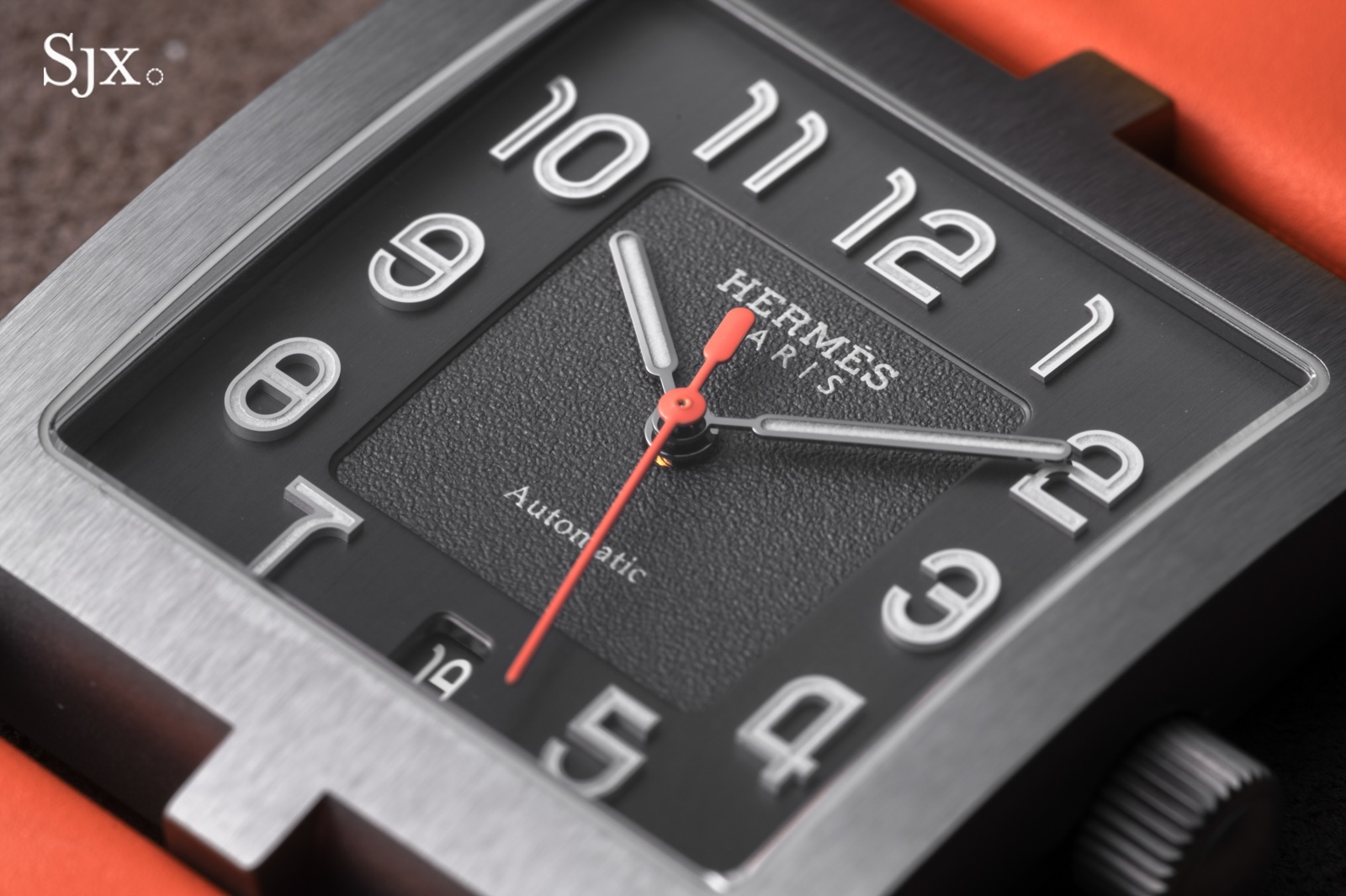
The Cape Cod’s case design compounds this. The current titanium variant features flatter case flanks and more squared edges than the standard polished Cape Cod models—a deliberate geometric shift, not simply a material swap. Flat surfaces are unforgiving: any deviation in the brushing stroke angle, any variation in abrasive pressure across the length of a flat panel, produces a visible artifact. On steel, the higher hardness gives the finisher a slightly wider process window. On titanium, the margin is narrower, and the tooling wears differently.
Machining Tolerances on Non-Round Geometry
Rectangular watch cases are machined from bar or block stock, and the internal geometry—movement seat, crystal ledge, crown tube bore, caseback register—must be held to tolerances that keep the movement stable and the water resistance seal functional to 100 metres. The Cape Cod Titanium is rated to 100 m, which means the gasket geometry at both the crystal and caseback must be precise enough to maintain compression across the seal under pressure. Titanium’s tendency to gall and work-harden during cutting requires specific tooling strategies: sharp carbide or coated tooling, controlled chip evacuation, and careful management of cutting speeds to avoid built-up edge. These are not insurmountable problems, but they add process steps and increase tooling consumption relative to steel.
The lug design of the Cape Cod is open—the quick-release spring bar tabs are visible through the lug aperture, which is why Hermès engineered a moulded cavity into the rubber straps to conceal them. From a machining perspective, open lug geometry means the lug walls are relatively thin sections, and thin sections in titanium are prone to vibration during cutting. Holding dimensional consistency on those walls, while also achieving the flat, squared profile the design calls for, requires fixturing that supports the part adequately without inducing stress that would distort the finished case.
The Vertical Brushed Finish: Process and Surface Integrity
The vertically brushed finish on the case flanks is the defining surface treatment of this reference, and it contrasts directly with the high polish used on the mainline Cape Cod. Brushing titanium is not the same operation as brushing steel. The lower hardness means the abrasive cuts more aggressively per pass, and the material’s tendency to smear rather than cut cleanly at lower pressures can produce a finish that looks dull rather than crisp. Achieving a consistent, fine-grain vertical brush on a flat rectangular panel requires controlled linear strokes with uniform pressure—typically a belt or pad finishing operation with a defined grit sequence—followed by inspection under directional light to confirm uniformity across the full panel area.
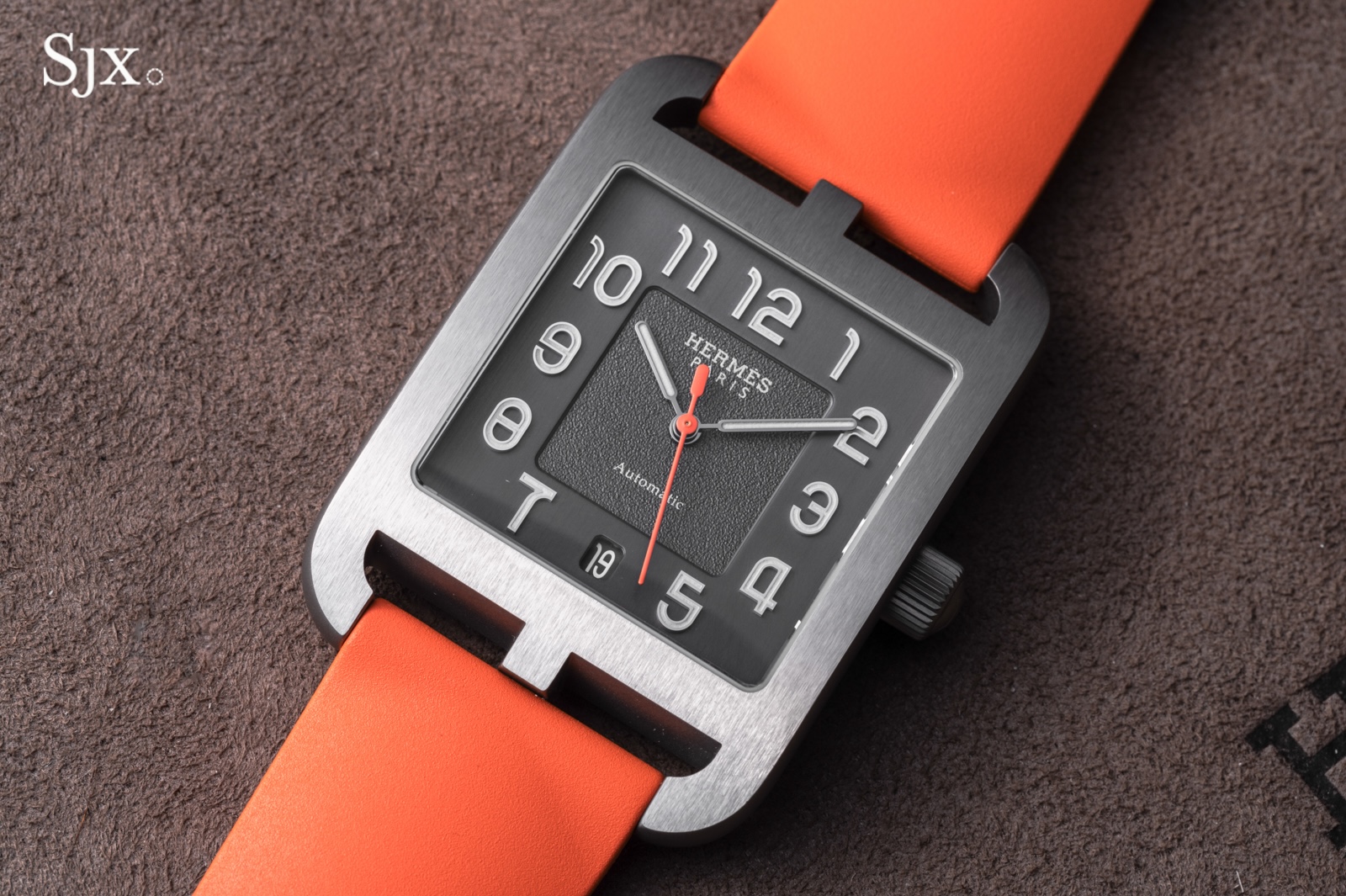
Edge definition is the critical quality checkpoint. Where the brushed flank meets the top surface of the case, the arrête must be clean and consistent in width along its full length. On titanium, that edge is softer than steel and can roll slightly under finishing pressure, which rounds what should be a sharp transition. Controlling this requires either a finishing sequence that addresses the edge last, or a masking strategy that protects adjacent surfaces. The result on the Cape Cod—squared edges with flat flanks—suggests the finishing process is well-controlled, but it is the kind of detail that requires ongoing process discipline rather than a one-time setup.
Calibre H1912 and the Case-Movement Interface
The H1912 is a Vaucher-derived movement, reflecting the stake Hermès took in Vaucher in 2006. The calibre now runs a free-sprung balance, replacing the Triovis regulator used in its earlier configuration. From a case construction standpoint, the movement seat in the titanium case must locate the H1912 securely enough that the free-sprung balance—which is more sensitive to positional variation than a traditionally regulated balance—operates within its designed positional error budget. The movement-to-case interface is not glamorous engineering, but it is where dimensional discipline in the case machining directly affects timekeeping performance.
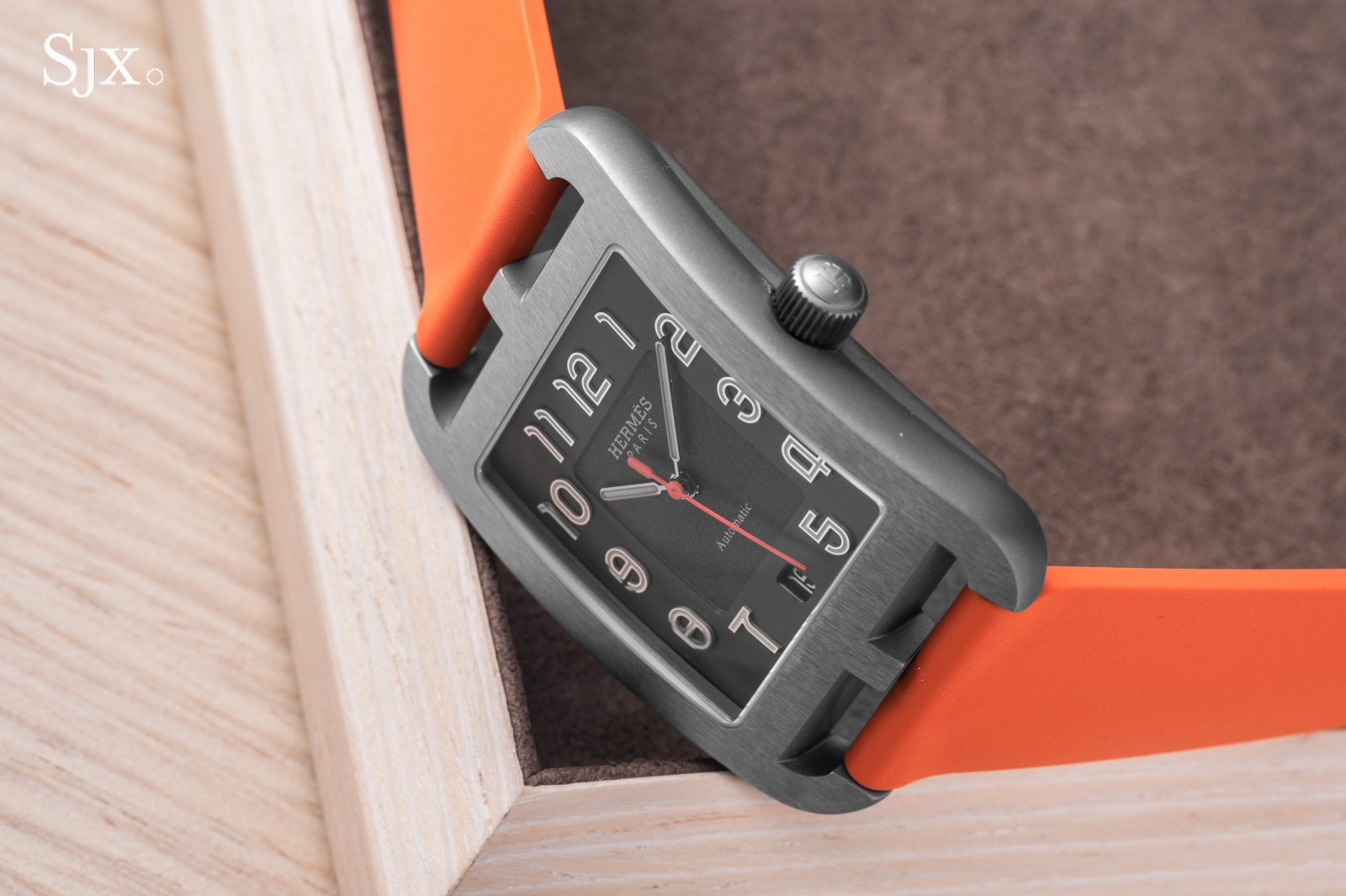
The sapphire crystal and the date disc visible at six o’clock are the only other elements the dial presents to the finisher’s attention. The collection-specific typeface, with its anchor-chain-derived numerals, is applied rather than printed, and applied markers on a brushed dial background require precise depth control to sit flush without creating shadow artifacts under the crystal. These are assembly-stage concerns, but they trace back to the tolerances held during case and dial machining.
The Cape Cod Titanium is available at Hermès boutiques without limitation as a production reference, which means the manufacturing processes described here must be repeatable at volume—not just achievable as a prototype. That is the more demanding standard, and it is where the real engineering work in a titanium rectangular case ultimately sits.