News
Ebel’s New Ownership Consortium: What Montres Journe, Chanel, and Pierre Jacques Signal for Swiss Movement Manufacturing
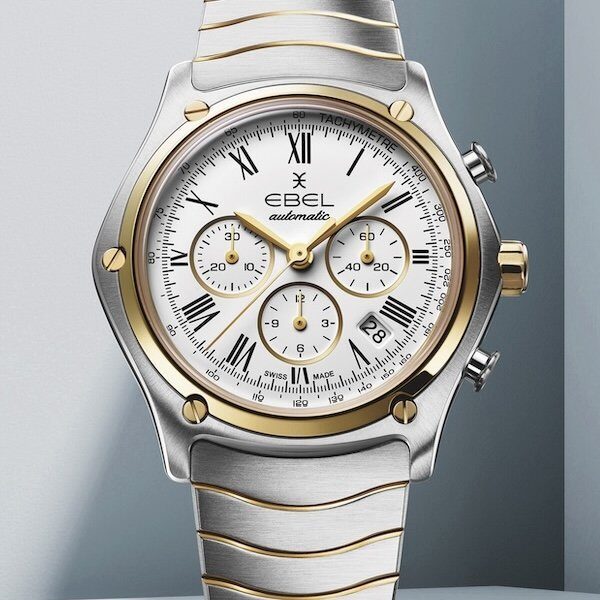
In October 2026, Movado Group entered into a binding agreement to sell a 95% interest in Ebel to a buyer group led by Montres Journe SA, the Geneva-based manufacturer operating under the F.P. Journe name, with Chanel and Pierre Jacques participating alongside.5 million, subject to adjustments, and remains conditional on customary closing requirements. Movado Group retains a 5% stake. Pierre Jacques will assume the role of Chief Executive Officer upon completion.
The assets being transferred are specific and consequential: trademarks, intellectual property, inventory, certain other assets dedicated to Ebel, and the Villa Turque — the La Chaux-de-Fonds property designed by Le Corbusier. These will be consolidated into a newly formed Swiss subsidiary of Movado Group, with some personnel dedicated to the business transferring alongside. The buyers acquire 95% of that subsidiary’s equity at closing, and Movado Group will provide transition services to maintain business continuity for Ebel’s customers and partners during the handover period.
Ebel was founded in 1911 in La Chaux-de-Fonds, a city whose industrial geography has shaped Swiss watchmaking for well over a century. The brand’s Sport Classic collection, which reaches its fiftieth anniversary in the year following the transaction’s announcement, represents the kind of long-cycle product architecture that is genuinely difficult to rebuild from scratch. Continuity of that architecture — its component geometries, supplier relationships, and accumulated production knowledge — is precisely what changes hands in a deal structured this way.
From a manufacturing standpoint, the composition of the buying consortium is the most instructive detail. Montres Journe SA operates at the upper boundary of independent Swiss movement production, where tolerances, finishing sequences, and component sourcing are managed with a degree of vertical integration that larger groups rarely attempt. F.P. Journe’s involvement as the lead buyer is not incidental. François-Paul Journe has been direct about his priorities: “Like Michelangelo and so many others after him: the product, the product, the product. EBEL has always stood for exceptional product, and I am delighted to contribute to its next chapter alongside my friends and partners.”
That orientation toward the product — rather than toward distribution infrastructure or brand licensing — has direct implications for how Ebel’s manufacturing assets are likely to be managed. Ebel’s in-house movement heritage, built up through its history in La Chaux-de-Fonds, represents exactly that kind of accumulated industrial capital.
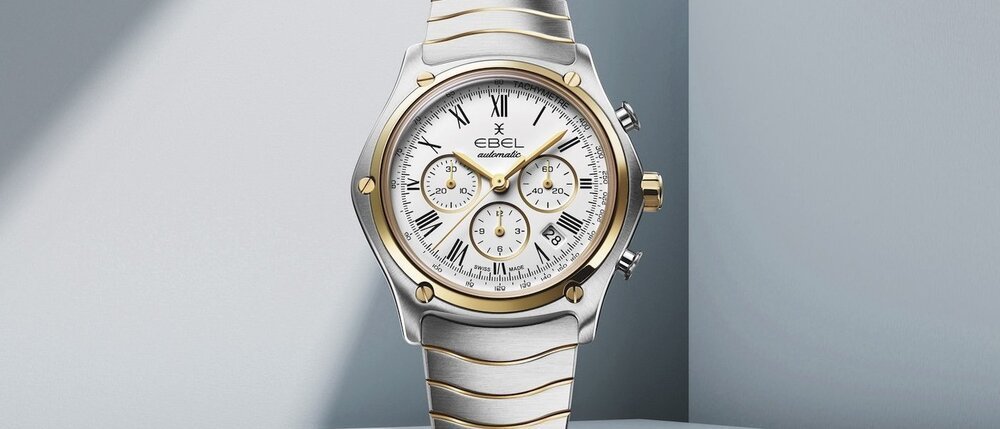
Chanel’s participation adds a different dimension. Frédéric Grangié, President of Chanel Watches and Fine Jewelry, framed the investment in terms of long-term confidence and craftsmanship preservation: “This investment reflects our confidence in the brand’s long-term potential and our commitment to supporting its development while preserving the craftsmanship, excellence and values that have defined EBEL for generations.” Chanel has its own established position in Swiss movement manufacturing, which means this consortium brings together complementary industrial competencies rather than redundant ones.
For Movado Group, the logic runs in the opposite direction. The sale allows the US group to concentrate resources on its accessible luxury and fashion watch and jewellery portfolio — a strategic narrowing that reflects the difficulty of simultaneously managing high-precision Swiss manufacture operations and volume-oriented consumer brands. Efraim Grinberg, Movado Group’s Chairman and Chief Executive Officer, acknowledged the fit: “EBEL is a prestigious brand with a rich heritage, known for its carefully curated collections, and we are very pleased to have found partners that share our appreciation for the brand and have an exciting vision for its future.”
The structure of the deal — a newly formed Swiss subsidiary holding the dedicated assets, with transition services provided by the seller — is a pragmatic mechanism for preserving operational continuity while the new ownership group builds its own management layer. Pierre Jacques steps into the CEO role with the Sport Classic’s fiftieth anniversary approaching, which gives the incoming leadership an immediate, concrete product milestone around which to organize the brand’s manufacturing and commercial priorities.
What this transaction demonstrates, more broadly, is that legacy Swiss movement infrastructure retains genuine industrial value when it passes to owners who understand how to operate it. The combination of Montres Journe’s movement-making expertise, Chanel’s manufacturing resources, and Pierre Jacques’s operational leadership represents a consortium assembled around production capability rather than brand speculation. Whether that translates into a revitalized calibre program or a repositioned Sport Classic will depend on decisions made at the bench level — in the component specifications, the finishing sequences, and the supplier qualifications that define what a manufacture actually produces. The Sport Classic anniversary in the coming year will be the first public indicator of which direction those decisions are taking.