Design
Grand Seiko Evolution 9 Bracelet Refresh: The Metallurgical and Finishing Realities Behind Six New Integrated Bracelets
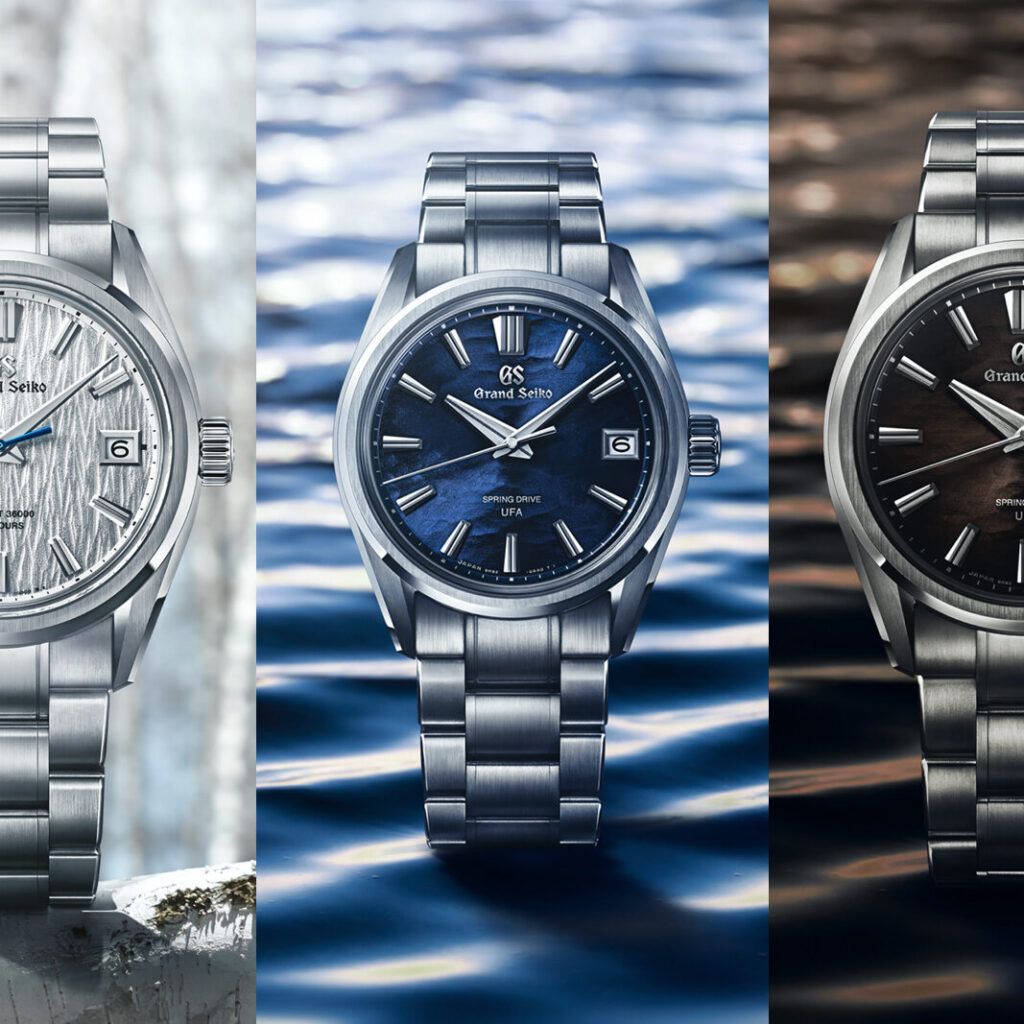
Grand Seiko’s Evolution 9 line launched in 2020 with a case architecture that earned genuine respect in the industry. The bracelets did not. Six years later, the 2026 refresh addresses that directly, fitting new integrated bracelets to six existing dial references while simultaneously introducing two new references — the mid-size Lake Suwa SLGB015 and the Moonlit Lake Suwa SLGB007. The bracelet redesign is the structural core of this update, and understanding what it demands from a manufacturing standpoint requires looking past the finished surface.
Geometry First: What Changed and Why It Matters
The new bracelets are described as an upsized version of those already equipping the existing 37 mm Evolution 9 models. On the 40 mm references, the bracelet now tapers from 22 mm at the lug end down to 18 mm at the clasp — a 4 mm reduction across the length of the bracelet. The 37 mm Lake Suwa SLGB015 runs a tighter taper, from 21 mm down to 17 mm. These are not cosmetic adjustments. A 4 mm taper across a multi-link integrated bracelet means every individual link must carry a different width profile, which cascades directly into tooling, fixturing, and finishing complexity.
When bracelet geometry changes across six existing dial references simultaneously, the manufacturing challenge is not simply producing one new bracelet design. It is producing a family of bracelet geometries that must each interface correctly with case architectures that were not originally designed around them. Lug geometry, the radius at which the bracelet meets the case, and the angular relationship between the first link and the case flank all require individual validation per reference. The fact that the new bracelets feel more substantial than those they replace — a qualitative outcome that reflects link thickness, cross-section, and the rigidity of the articulation system — suggests the geometry revision was thorough rather than superficial.
Ever-Brilliant Steel: Material Properties and Their Finishing Consequences
The material choice is the most consequential manufacturing decision in this refresh. The majority of the new models are cased and braceleted in Ever-Brilliant Steel, Grand Seiko’s proprietary alloy, which the brand describes as more lustrous and corrosion resistant than standard stainless steel. The EB designation is now marked on the case back, which is new for this wave of watches. The Night Birch SLGH029 and Moonlit Lake Suwa SLGB007 are the exceptions, both produced in High-Intensity Titanium.
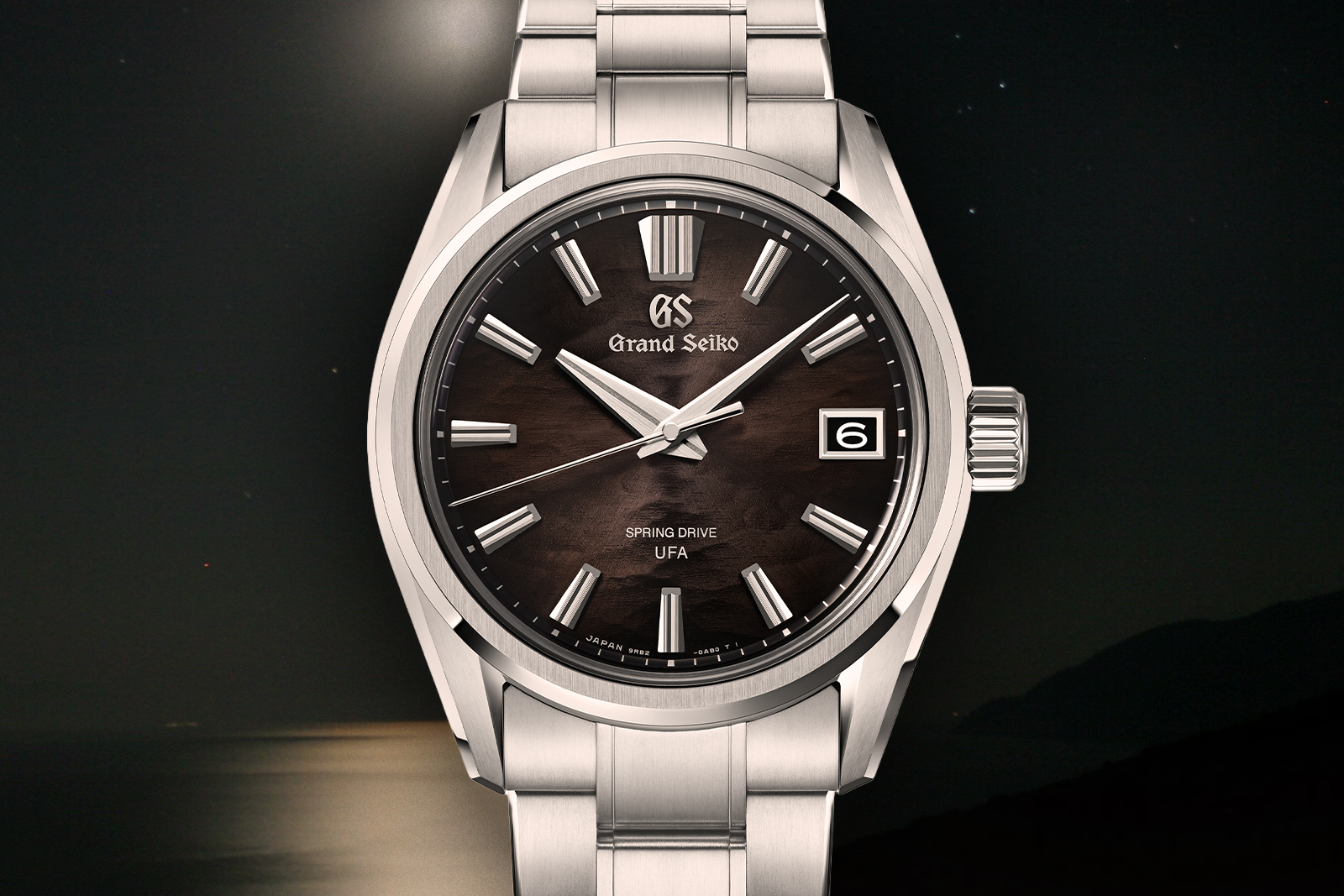
For a component manufacturer, the distinction between these two alloys is not academic. Ever-Brilliant Steel’s higher corrosion resistance and enhanced surface reflectivity suggest an alloy composition that responds differently to polishing than conventional 316L or 904L stainless. Achieving the mirror surfaces that Grand Seiko’s Zaratsu-adjacent finishing demands requires a material that can sustain a true flat polish without orange-peel distortion — and that means the alloy’s grain structure, hardness, and work-hardening behaviour under polishing pressure all become critical variables. A bracelet link is not a flat case flank; it is a curved, articulated component with tight internal radii, and maintaining surface integrity across those transitions during multi-stage polishing is where alloy selection and finishing process design intersect most directly.
High-Intensity Titanium presents a different set of constraints. Titanium alloys are notoriously difficult to polish to a true mirror finish because of their tendency to smear rather than cut cleanly under abrasive contact. Achieving the contrast between brushed and polished surfaces that Grand Seiko’s aesthetic requires on a titanium bracelet demands tighter control of abrasive sequence, contact pressure, and tool geometry than the same operation on steel. The fact that Grand Seiko is running this finish on integrated bracelet links — not just flat case surfaces — indicates a finishing process that has been specifically adapted for the alloy and the geometry together.
The Clasp: In-House Manufacture and the Part-Sharing Reality
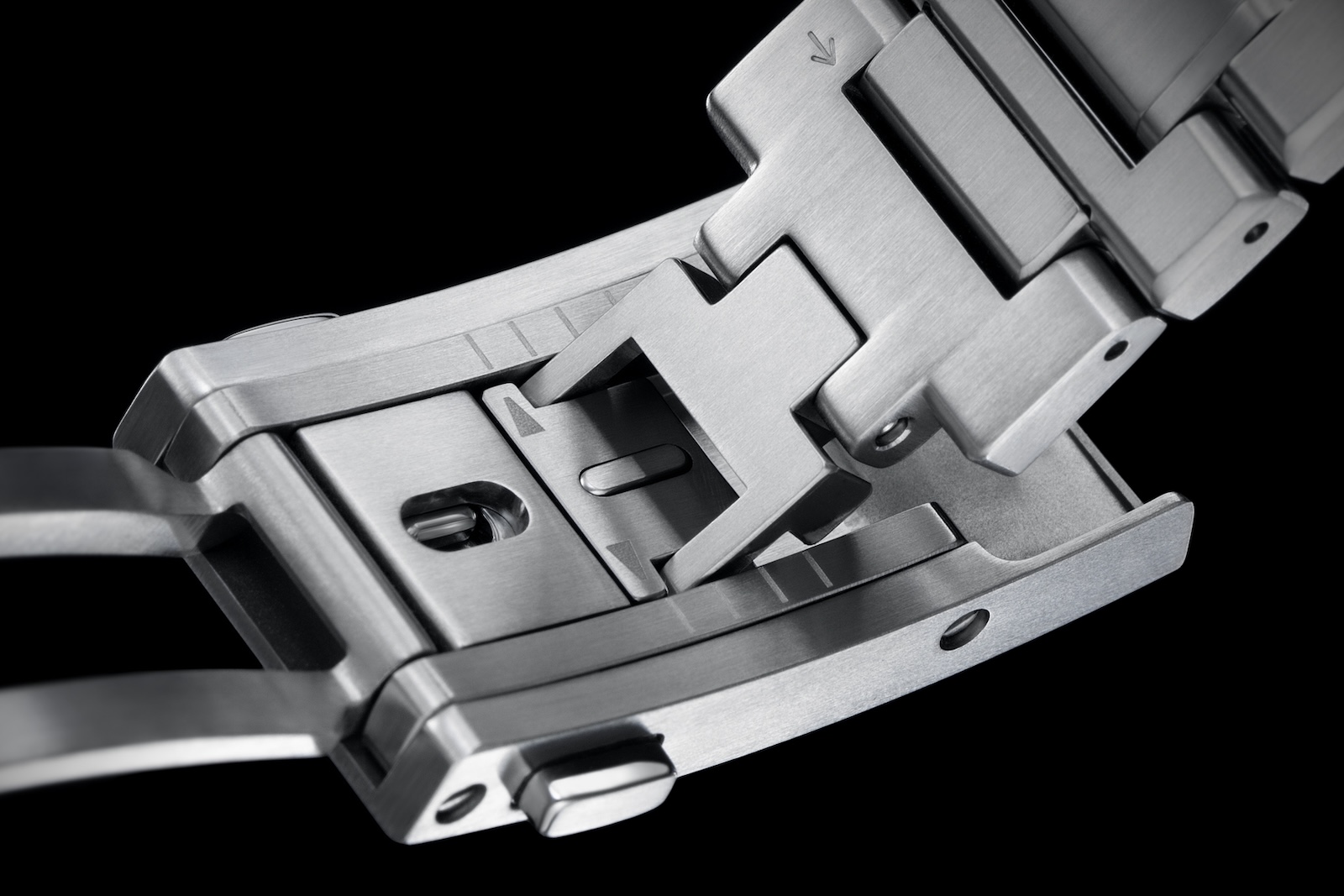
The new clasp is made in-house and offers three points of tool-less quick adjustment over a 6 mm range. The adjustment mechanism works by rotating the bracelet perpendicular to the clasp, pushing in, and sliding — a system that requires precise tolerancing on every moving interface to function consistently without play or sticking. All moving parts are well machined, and the overall mechanism functions reliably, though it does not permit easy on-wrist resizing in the manner of some competitor systems.
One manufacturing detail is worth noting explicitly: because of part sharing, some components of the Ever-Brilliant Steel clasps are made from titanium. Where titanium components interface with Ever-Brilliant Steel components within the same clasp assembly, surface treatment and dimensional tolerancing must account for the different hardness and thermal expansion characteristics of the two alloys. It is a small detail in the finished product and invisible to the wearer, but it represents exactly the kind of cross-material interface management that integrated bracelet manufacturing routinely demands.
Movement Context: The Cal. 9RB2 and What It Means for the Assembly
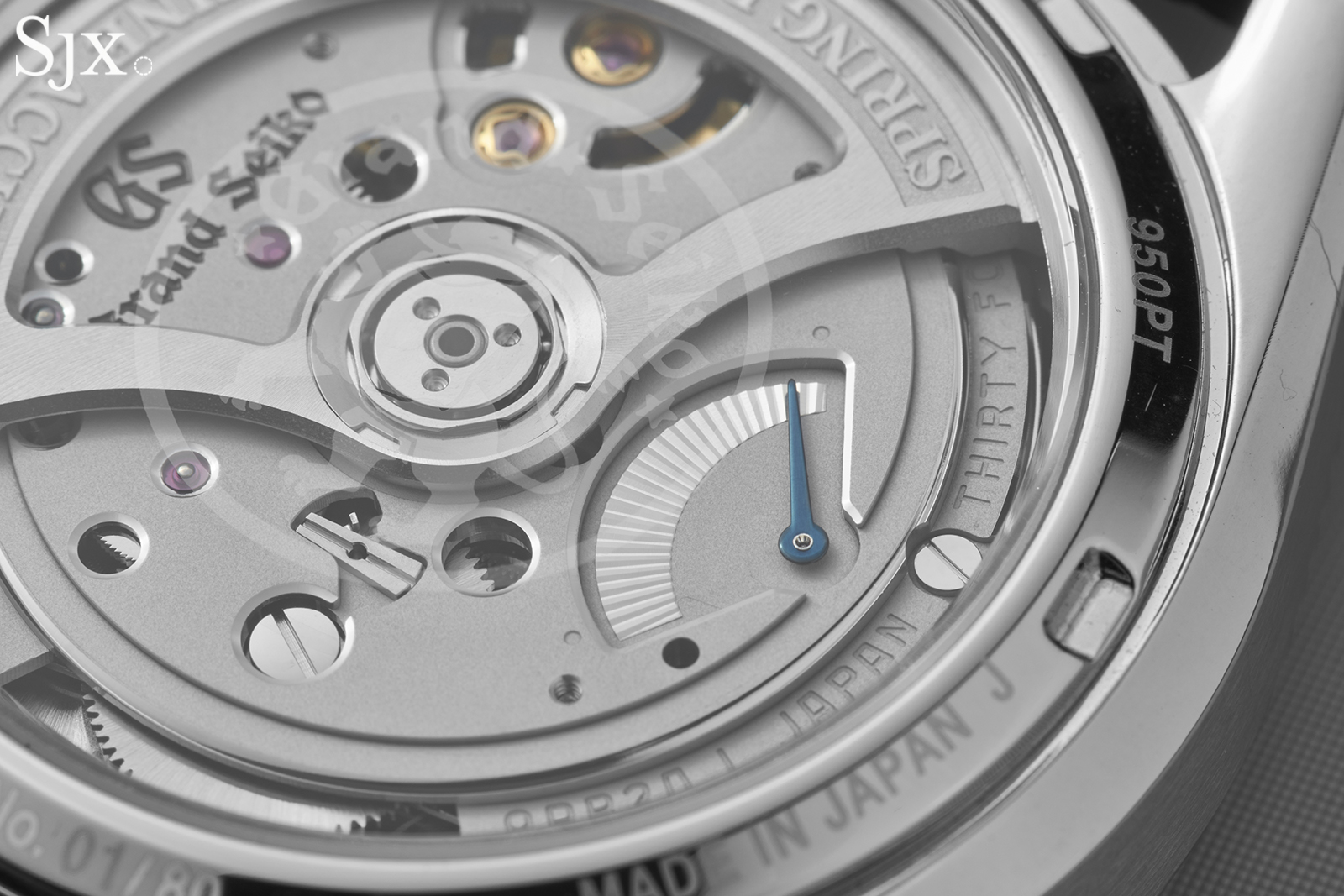
The Spring Drive models in this refresh are powered by the cal. 9RB2, which replaces the cal. 9RA2 used in the previous generation. Both movements feature active temperature compensation and passive vacuum insulation. Grand Seiko’s stated timing tolerance is within three seconds per month and 20 seconds per year. The 9RB2 carries the UFA designation, which the brand introduced on the platinum SLGB001 last year. The movement change represents a simplification relative to the 9RA2’s extended power reserve, but the UFA designation and the timing specification remain consistent with the line’s positioning.
For those references, the bracelet and material upgrades represent a straightforward improvement over the outgoing generation with no movement trade-off involved.
The Spring Drive models are available now; the Hi-Beat mechanical models follow in October. For brands and component suppliers watching how Grand Seiko manages multi-reference bracelet transitions at scale, this refresh offers a useful case study in coordinating material selection, finishing process adaptation, and clasp engineering across a heterogeneous lineup — without resetting the case architecture that made the Evolution 9 successful in the first place.