Design
Greubel Forsey Balancier QM: What the Qualité Musée Standard Actually Demands at the Component Level
Greubel Forsey Balancier QM: What the Qualité Musée Standard Actually Demands at the Component Level
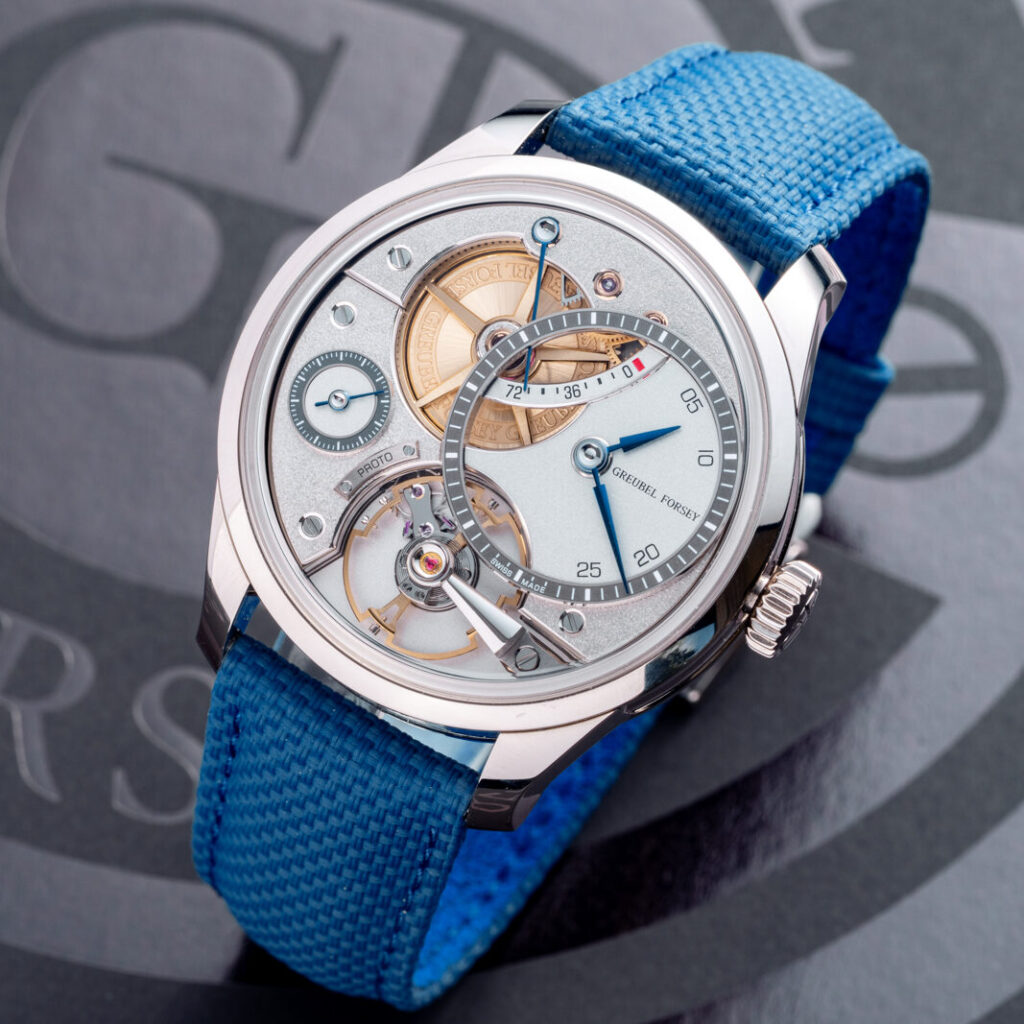
The Greubel Forsey Balancier QM, limited to 33 pieces in a 39.6 mm white gold case, is the first watch to carry the brand’s newly formalized Qualité Musée designation. That designation is not a marketing invention applied to a new movement architecture. It is, more precisely, a codification of finishing and construction criteria that Greubel Forsey has been applying — without a formal label — across its existing programme. Understanding what the QM standard actually demands, and where it places the burden on manufacturing, is more instructive than the seal itself.
Architecture and Dimensions
The Balancier QM is built on the Balancier Contemporain platform, a time-only calibre running at 3 Hz with a 72-hour power reserve. Case diameter holds at 39.6 mm, and total thickness including crystals is 12.25 mm — identical to the Contemporain. That dimensional continuity is not incidental. It reflects a deliberate choice to concentrate development resources on finishing and internal construction rather than on a new movement architecture. The in-house free-sprung balance measures 12.6 mm in diameter, a meaningful size for a watch of this footprint, and contributes to the visual depth that characterizes the multi-layered dial.
The off-centre time display layout carries over from the Contemporain, and the dial’s construction creates multiple planes that demand finishing on surfaces not always visible during normal wear. That is precisely the point. The QM standard is oriented toward components that future restorers will encounter, not toward surfaces optimized for the point of sale.
What the QM Designation Actually Codifies
The Qualité Musée seal functions as a brand-specific quality standard, comparable in intent to the Patek Philippe Seal or the JCB Seal associated with Jean-Claude Biver. Its scope covers finishing protocols, hand-decoration benchmarks, and construction criteria across the movement. Two details about how the designation is applied are telling. First, the QM marking does not appear on any of the movement’s visible surfaces. Instead, an engraved plaque is installed deep within the movement — positioned for future restorers rather than for the wearer or the retailer. Second, the only external reference to the QM name is relief-engraved text on the rear bezel, set against a hand-hammered backdrop.
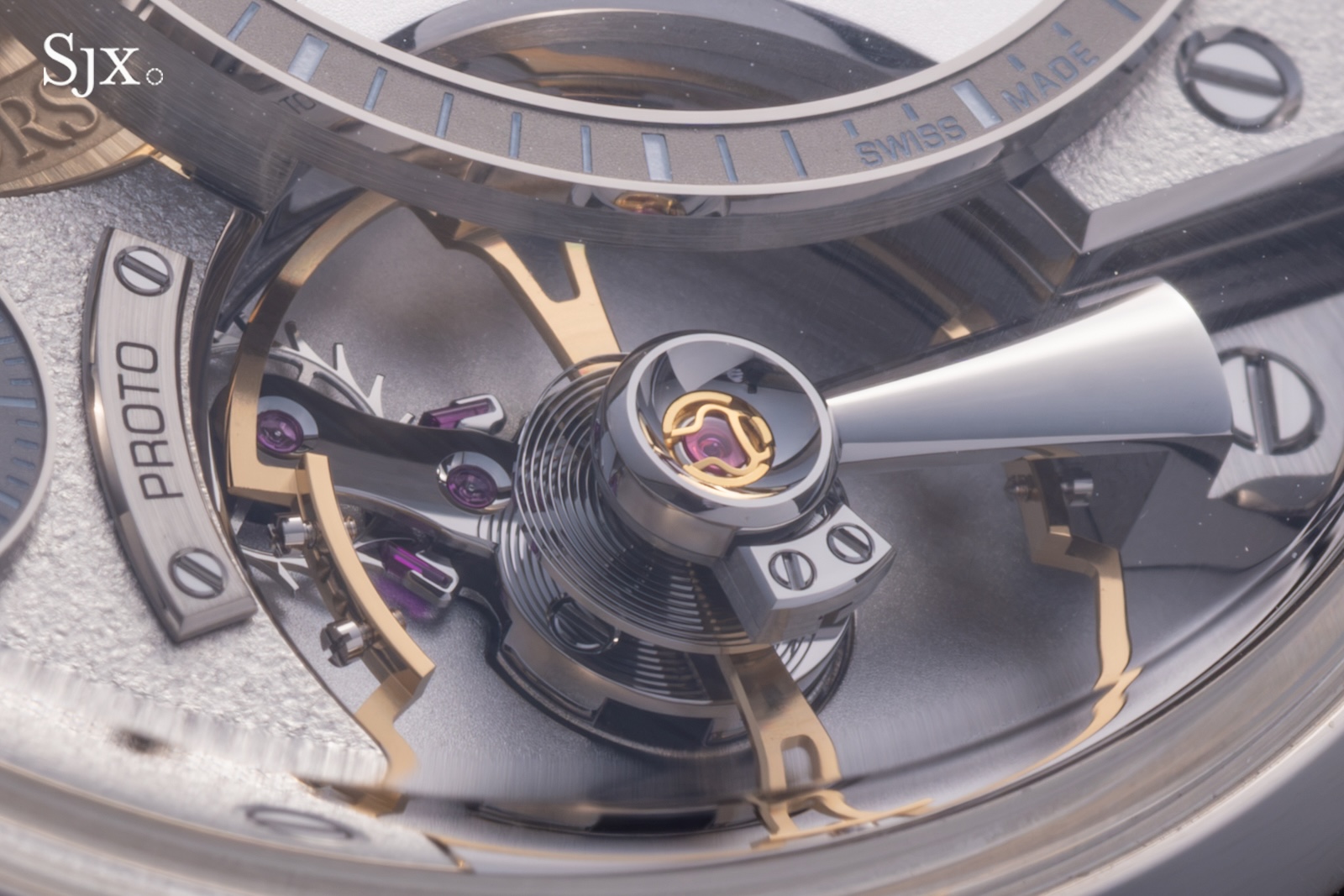
For component manufacturers and movement constructors, this framing has practical implications. It means finishing criteria extend to surfaces that are difficult to access during assembly and nearly invisible during normal service intervals. The escape wheel, for instance, is polished on both sides. The pallet stones are described as artfully rounded — a detail that requires hand intervention and cannot be achieved through standard industrial processing.
Hairspring Production: The Manufacturing Significance
The Balancier QM coincides with the broader commercialization of Greubel Forsey’s in-house hairspring, previously reserved for the Hand Made 1 and Hand Made 2. Going forward, the brand intends to install an in-house hairspring in each new model, beginning with this reference.
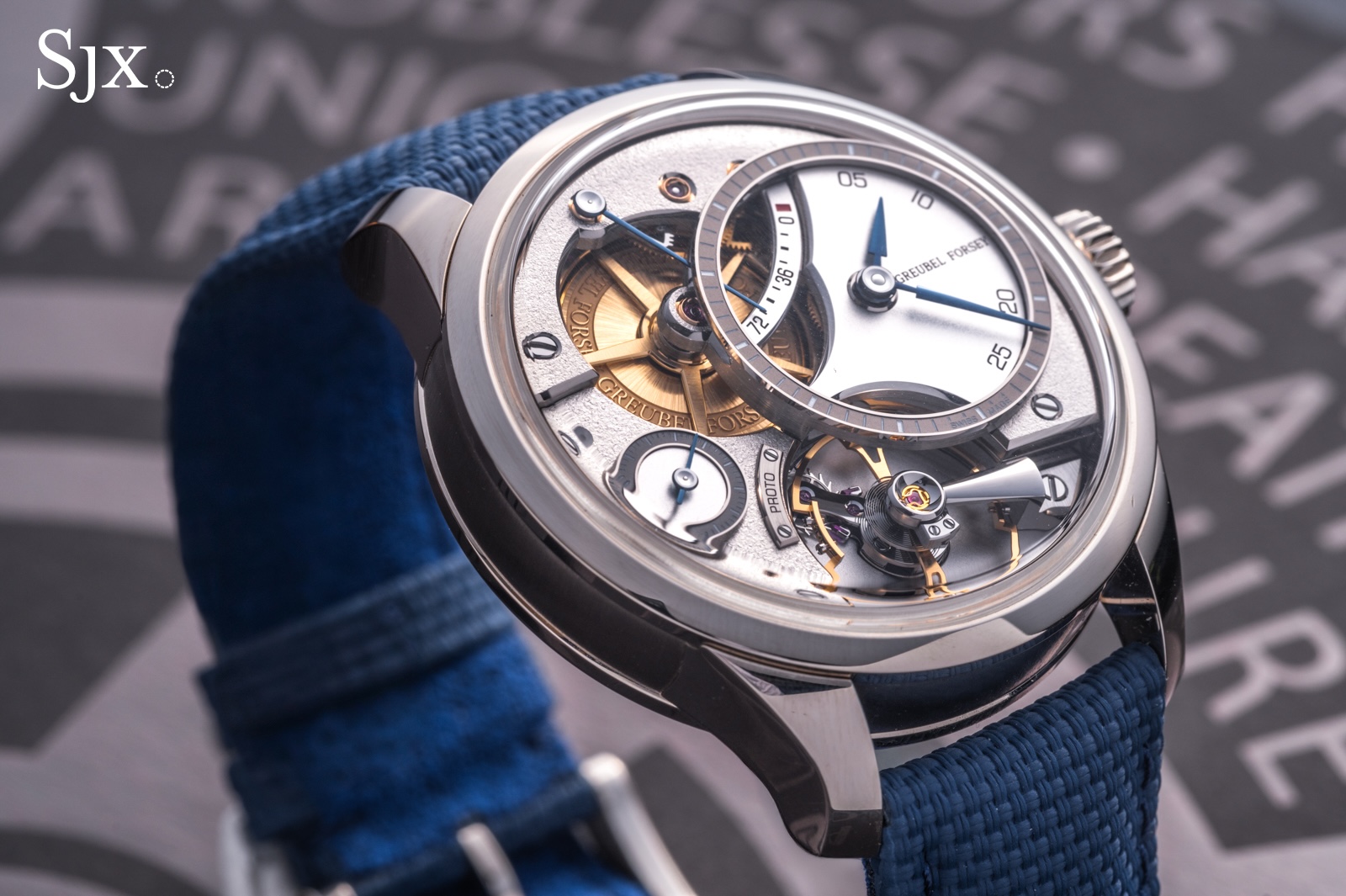
Hairspring production is one of the most technically demanding processes in mechanical watchmaking, and it is normally handled by industrial specialists. The fact that Greubel Forsey developed its hairspring production process to comply with the requirements of its Hand Made programme carries a specific manufacturing implication: the machines used are restored antiques, not modern CNC equipment. That constraint is not nostalgic. It reflects the Hand Made programme’s criteria for what constitutes acceptable production methodology, and it means the hairspring supply chain for QM-designated watches is deliberately insulated from standard industrial sourcing.
For brands evaluating their own component sourcing, this is a significant data point. Bringing hairspring production in-house at this level of process specificity requires not just capital investment in equipment, but the institutional knowledge to operate and maintain machinery that is no longer in production itself.
Finishing Research and the EWT Laboratory
Greubel Forsey has established a dedicated finishing research wing within its Experimental Watch Technology Laboratory. The stated objective is to develop new finishing techniques that might eventually become conventional practice — a long-horizon investment that positions the brand as a source of finishing methodology, not just a consumer of established craft traditions.
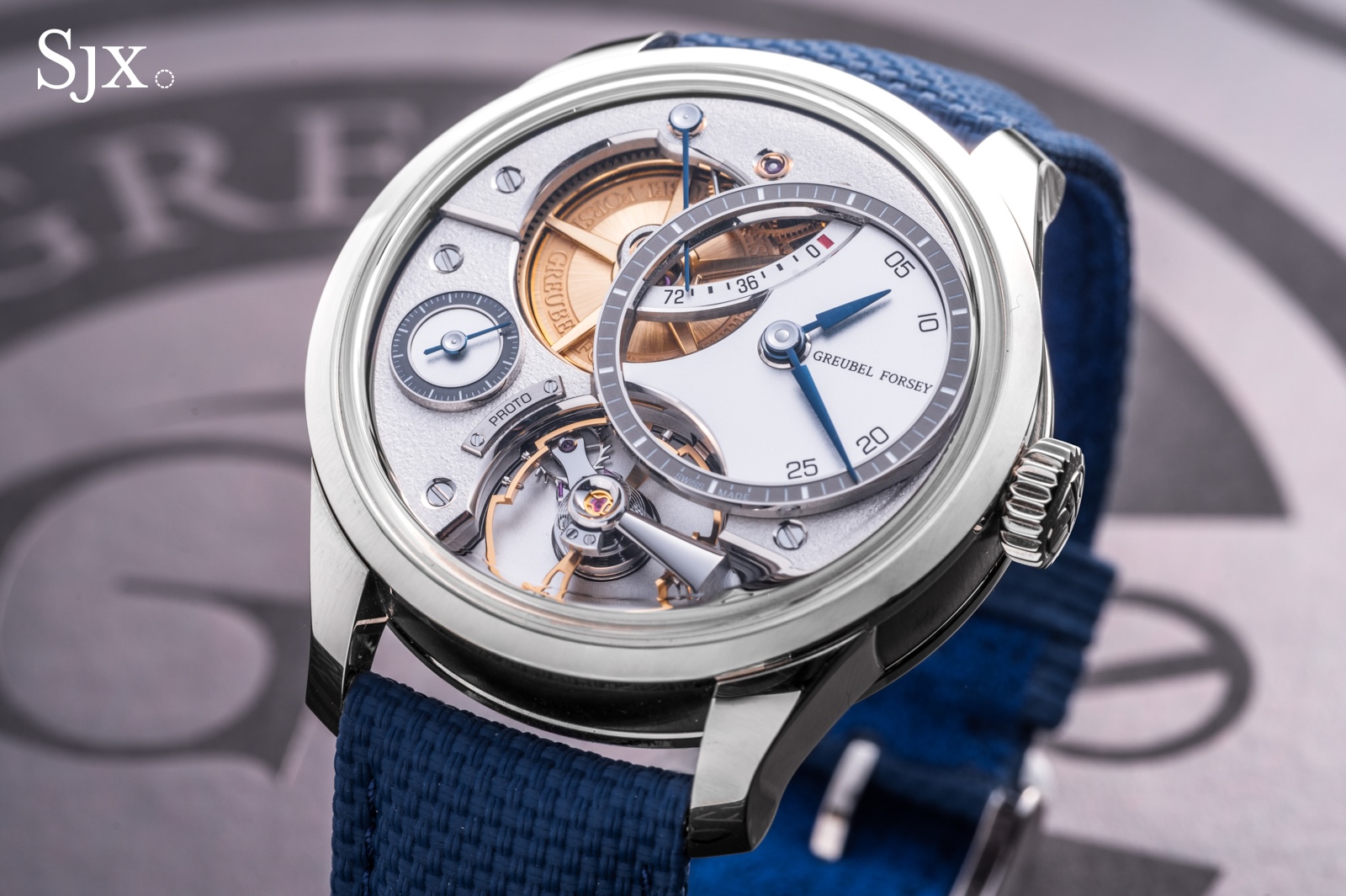
For the broader supply chain, this matters. Finishing at the level the QM standard demands — polished escape wheels on both faces, hand-rounded pallet stones, hand-hammered case surfaces, engraved internal plaques — represents a labour and process intensity that is difficult to scale and nearly impossible to audit through standard supplier qualification frameworks. The QM designation is, among other things, an acknowledgment that these processes require their own documentation and verification infrastructure.
What Comes Next
Greubel Forsey has indicated that before the end of 2026, it intends to launch another calibre in a sub-40 mm convex case, with two further similarly sized movements planned for 2027, one of which will incorporate another of the brand’s fundamental inventions. Each of these is expected to carry an in-house hairspring. The QM standard, applied from the outset to the Balancier QM, will presumably extend to subsequent references — which means the finishing and construction criteria codified here will need to be maintained across a broadening product range. That is the real test of whether a quality seal functions as a genuine manufacturing standard or as a designation applied selectively to flagship pieces.